

Failed Kings and Future Hope: Advent Lesson from Isaiah 11
What makes this section of Isaiah profound is that Ahaz’s example as the worst possible king is followed by 5 chapters of God promising the best possible king and kingdom--it is here we find our particular passage. When the nation of Israel (and all its promises) are felled like a great tree due to its own sins and the sins of its king, God promises resurrection for the broken and burnt stump through a shoot of new growth. An impossible reality, but one God intended to ultimately bring about through the life and ministry of Jesus.

Historical Context for Isaiah
The year is around 732 B.C, and the unity that would have once described the 12 tribes of Israel is a long distant memory. In response to the impending doom that was the Assyrian war machine, the Northern Kingdom of Israel had formed an alliance with Syria and menacingly came to stand upon the doorstep of King Ahaz of Judah. Ahaz is met with a hopeless situation; Israel and Syria have threatened to kill him if he chooses not to join their anti-Assyrian alliance. But even if he joins with them, the chances of resisting the overwhelming might of Assyria are bleak at best. Ahaz is a practical king, and so in the face of 3 hostile nations and overwhelming military strength, prophets and prayers hold little sway over his heart. And so Ahaz chooses what is wise in the eyes of the world, but unthinkable in the eyes of God--he seeks salvation through bowing the knee to Assyria’s King.
The prophet Isaiah’s response to Ahaz’s faithlessness comes in chs. 8-12, often known as “the book of Immanuel” (perhaps a familiar title during this season of Advent!). What makes this section of Isaiah profound is that Ahaz’s example as the worst possible king is followed by 5 chapters of God promising the best possible king and kingdom--it is here we find our particular passage. When the nation of Israel (and all its promises) are felled like a great tree due to its own sins and the sins of its king, God promises resurrection for the broken and burnt stump through a shoot of new growth. An impossible reality, but one God intended to ultimately bring about through the life and ministry of Jesus.
The Meaning of Isaiah 11:1-5
The images presented in Isaiah 11 may initially seem foreign and out of place when thinking about Advent--shoot, stump of Jesse, branch, etc.--but looking back at Israel’s story we can see a number of pivotal moments that set us up to understand the full weight of Isaiah’s words. It started in Genesis 3, when Adam and Eve were exiled from Eden with the promise of an “offspring” [literally seed] who would come and crush the head of the deceitful serpent; Gen. 15 where God made a promise to establish Abram’s “offspring” [seed]; and 2 Samuel 7, where God made a covenant with David, promising to establish an everlasting kingdom for David’s “offspring” [seed].
Advent: The Coming Immanuel
Having the benefit of the New Testament, we can see more clearly the hope that Isaiah’s message offered: It is no accident that one of the favorite titles of Jesus that the Gospel writers would use was “Son [offspring] of David” (Matt. 1:1). And when Paul spoke of Jesus as the “offspring [seed] of Abraham” (Gal. 3:16), we can think back upon this promise in Isaiah. Up to this point in the book of Isaiah, Israel had only experienced kings who traded justice and faithfulness for idolatry and oppression. But God had a plan to provide a different kind of king, and this promise went all the way back to the seed that was first promised. This offspring of David, this King, would wear “righteousness” and “faithfulness” as a belt and bring justice to the poor and suffering. He would walk in the way of God's Spirit and offer true salvation. This king would be Jesus.
Are you looking to better understand the Bible? Sign up for our Biblical Narrative Series today.

What does Micah 6:8 mean?
What does Micah 6:8 mean? What was once an unrecognized verse from one of the more obscure books of the Minor Prophets has experienced a “glow up” of sorts in recent months. As Christ-followers attempt to navigate the socio-political climate of 2020, Micah 6:8 has become somewhat of a “filter” through which they engage with life in a way that is seeking after faithfulness.
Living out Justice, Kindness, and Humility in 2020.

He has told you, O man, what is good;
And what does the Lord require of you
But to do justice, to love kindness,
And to walk humbly with your God?
-Micah 6:8 (NASB)
What was once an unrecognized verse from one of the more obscure books of the Minor Prophets has experienced a “glow up” of sorts in recent months. As Christ-followers attempt to navigate the socio-political climate of 2020, Micah 6:8 has become somewhat of a “filter” through which they engage with life in a way that is seeking after faithfulness.
Who was Micah?
Micah the man was likely just a regular guy living in the suburbs outside of one of the larger cities in the nation of Judah. His ministry was long, spanning over 60 years. In essence, Micah had “seen some things.” There had been a time of great prosperity that was immediately followed by a steep decline in the social and economic well-being of the people. The disparities in the life of the “upper class” and the “common person” were vast and the prospects for those without power were bleak. There was internal political pressure from corrupt kings, untrustworthy spiritual leadership, and external political pressures from nations that wanted to invade and take advantage of the people. Sound familiar? Keep in mind this was happening in the 700s BCE. Christ-followers shouldn’t ever be concerned that the Bible is antiquated and irrelevant, especially the Old Testament!
With that in mind, let’s take a moment to examine what these words meant to Micah and the culture into which they were written.
“Do Justice”: מִשְׁפָּט mishpat: to do no unrighteousness in judgment, that which is just, lawful and according to the law
To “do justice” is an action. It is not just an acknowledgment that things are not as they should be, not an observation that gets lip service. It isn’t simply knowing the difference between right and wrong. It means living out life in a way that is always moving toward that which is just. This means both in the domains Christ-followers find themselves interacting (work, school, educational institutions, churches, etc) and in their lives. To “do justice” is to set one’s heart on that which is just and consistently be moving in that direction. To “do justice” is to love your neighbor as yourself.
“Love Kindness”: חֶסֶד checed: zeal toward anyone, benevolence among men, mercy and pity to those with misfortunes
To “love kindness” is an action. It isn’t so simple as to mean that one is perceived as a “kind person.” It doesn’t even mean taking action that is a “kind thing to do.” It means that kindness motivates you to act and act zealously! The definition of “zeal” is: great energy or enthusiasm in pursuit of a cause or an objective. To “love kindness” means to pursue others in a way that shows them that your heart is for them on a personal, human level. To “love kindness” is to love your neighbor.
“Walk Humbly With Your God” : צָנַע tsana: to act submissively, modestly
To “walk humbly with your God” is an action. The root word here is related to “lowly.” This is living from a posture that doesn’t just have an inward impact, but also an outward one. A Christ follower’s “walk” (meaning your day to day faith life) is guided by the one to which that life is submitted. It means living a life submitted to God and allowing him to guide your path in a posture of modesty and humility. To “walk humbly with your God” is loving him with all your heart, soul, and strength.
In light of all this, Micah asks us to consider: “What are we supposed to do?”
Pastor Mike Ashcraft of Port City Church in Wilmington, NC is fond of saying, “If God created life, then he gets to define it.” It’s absolutely true. In Micah 6:8, there exists a list of requirements that God desires for those walking in his ways to define themselves. As lovers of justice, bearers of kindness, living in and walking closely beside him. It is an embodiment of what Jesus defines as the greatest commands.
The answer is practical, daily action. In the year 2020, it can feel like nothing an individual can do will help or change the circumstances that are the day to day reality. However, Micah provides somewhat of a “checklist.” Do justice, love kindness, and submit to walking not in our own ways, but in the ways of Jesus, the Christ, the Lord, and the Savior to all who profess faith in Him.
Looking for more on the book of Micah? Check out this video that summarizes the main ideas and themes of the book by the Bible Project. Wanting even more? Register for our School of Biblical Studies, where you get to study every book of the Bible in its historical setting.

Morgan Phaneuf
Morgan is a Bible teacher for Emmaus Ministries. She is a graduate of the Emmaus School of Biblical Studies. She is deeply passionate about seeing every Christ follower be able to know and confidently interact with the Bible.
Morgan is married to Justin and mother to their two children Drake and Tannis.

Alumni Spotlight: Bre Dobbins
It deepened my trust in Him. I thought I could do it all on my own and be Super Woman. Without Emmaus, I never would've seen how much I needed Him. I was arrogant, and I didn't even know it. I learned so much about the Bible that I didn't know. I still use the inductive method when I'm reading a book and I try not to jump straight to application.

Bre, We are so excited to finally be catching up with you. Where are you now and what are you up to?
I live in Hendersonville, NC, and I’m in full-time nursing school, working as a CNA and working part-time as the Girls Ministry Director at my church. I've been doing that for about 3 years now and I love it. If I wasn't absolutely sure God has called me to be a nurse I would be working full time in ministry. I do hope to combine the two once I get my degree and do a long-term mission trip through nursing. I love my students, and ESBS (Emmaus School of Biblical Studies) helped me so much to be able to teach the Bible better and prepare my talks in an inductive method rather than just going straight to application.
A moment where it all "clicked"?
During our first book, Philemon I realized that I made the right decision to give up so much to come to Emmaus and that I was going to learn and grow a lot in the next year!
How are you still using what you learned at Emmaus?
Before Emmaus, I had never really studied the Old Testament. I knew the typical Bible stories, but I didn't think they were all that important, but man was I wrong. It all points to Jesus, and it's all so interesting and applicable, so I use what I learned every single week with my youth group. Whether it's diving into a passage, sharing the cool history and background of the Bible, teaching them how to color code, or teaching them how every chapter can have an impact on them, I use it every week!
I also use conflict resolution, leadership skills, and fun stories that show the application of certain passages. I talk about ESBS all the time in my talks and how much that year meant to me and how much I learned.

What sticks out to you the most 3+ years later?
The community we built. I learned so much from living in a small community and we still keep in touch to this day. I have Emmaus to thank for that! I didn't think it would be that hard to live with some amazing people at my favorite place on earth (Camp Lurecrest will always be my second home). But I learned so much from living in such a small community and with the other students and teachers. We still keep in touch to this day. It's crazy how something that's so tough but so rewarding really allows you to meet those life-long friends who are literally all across the States now.
How did Emmaus affect your relationship with God?
It deepened my trust in Him. I thought I could do it all on my own and be Super Woman. Without Emmaus, I never would've seen how much I needed Him. I was arrogant, and I didn't even know it. I learned so much about the Bible that I didn't know. I still use the inductive method when I'm reading a book and I try not to jump straight to application.
What is your best memory from the school?
Any memory with my roommate, Abigail Wurst. We still talk almost daily and she is one of my best friends now. Also taking our Numbers retreat at the beach and my team winning at Jeopardy :)
There are so many fun memories we had - watching movies, making our award-winning apple spice cupcakes, painting nails, talking about Bill (our honorary cat who we allowed to stay at Camp). I do remember one evening craving Mexican food so I texted the students and staff who were on campus and found 3 others who were willing to drive an hour just so I could get food from one of my favorite places. Driving those winding roads and just encouraging each other and laughing, makes me smile.
Favorite book during your SBS?
I loved 2 Timothy and 2 Corinthians. 2 Timothy really made me think about my life and what impact I wanted to leave behind. 2 Corinthians really humbled me and allowed me to see that it was not myself that was holding me up but God.
Thank you Bre Dobbins for sharing how your time at Emmaus changed your life and is helping you daily now! If you would like to learn more about the school that Bre attended, you can click here to learn more.
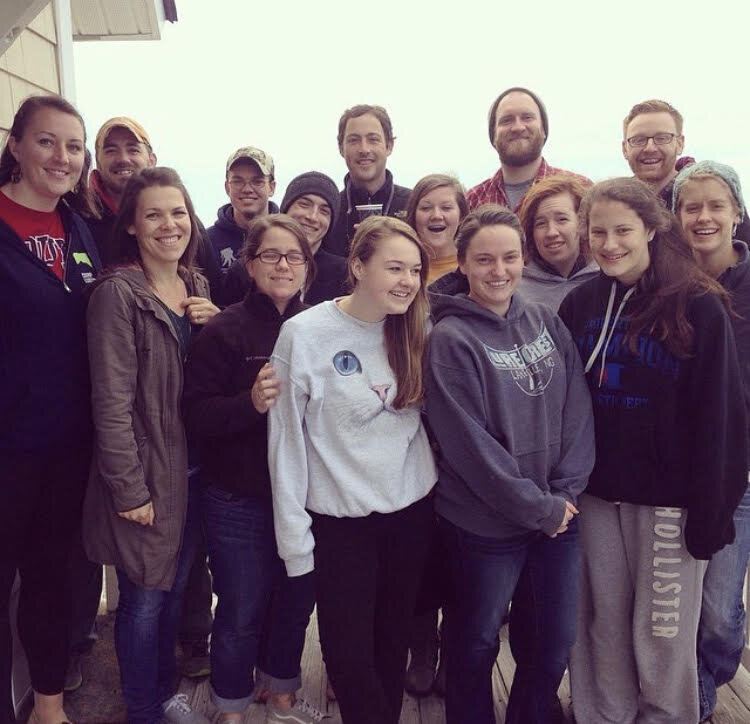

Alumni Spotlight: Hamp Kennedy
I was young when I went to Emmaus but everything has a time and place, and God put me there that year for many reasons that are clear to me now. With everything health-related I went through that year my faith would not be where it is today if I hadn’t done the school. I would never have met so many incredible people, including my dear friend Evan Hays. The list goes on, and I’m glad God put me there.

Hamp, we are so excited to be catching up with you. Where are you now and what are you up to?
I’m in St. George, Virginia which is about 30 minutes from Charlottesville.
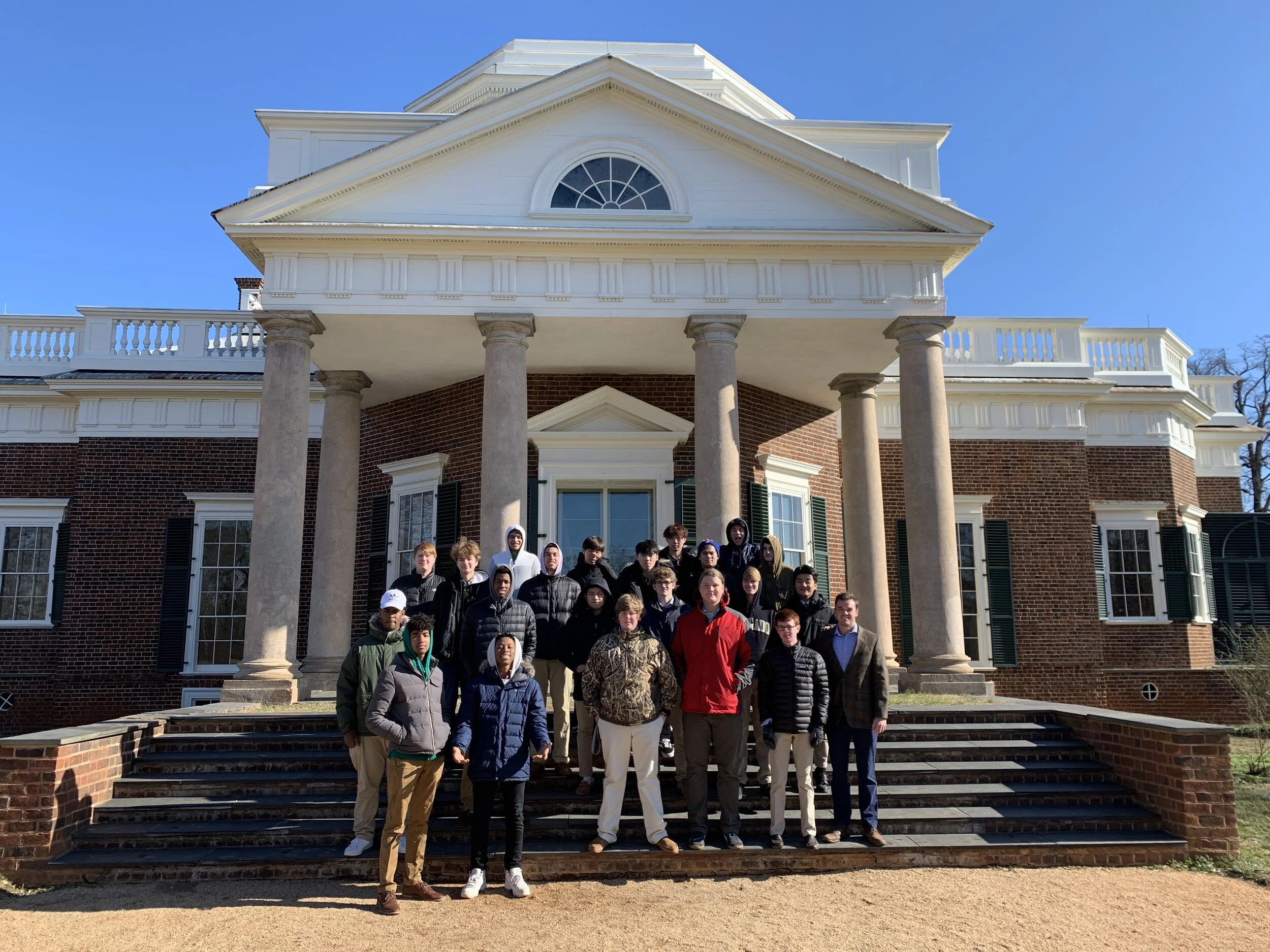
I teach US History at an all-boys boarding school about 15 minutes from Shenandoah National Park, it’s beautiful! I’m also a dorm parent for sophomore and juniors, an advisor, and I coach track in the Spring. The school is affiliated with the Episcopal Church, so I am able to minister to the young men and help them through their teenage years.
What led you to Emmaus?
I learned about Emmaus while I was a camper at Camp Lurecrest. In 2013 I was on staff after having decided I needed to take my faith more seriously. My immediate supervisor, Josh Kerzman, was starting the school in the fall and we had countless conversations about faith and the Bible. I asked him so many questions that he finally hinted that I should do the school if I want to learn more. I was unsure if I was going to go to college or enlist in the military after graduating high school, so this seemed like a pretty good way to spend a gap year. My thought was, "If I'm going to be a Christian I ought to know what the Bible says." So when my friends went to college I went to Emmaus!
What sticks out to you the most 3+ years later?
God’s character. Throughout history, He is constantly looking after His people and calling them back to Him when they go a different way. His consistency and love throughout the whole Bible has been a huge comfort in my own life, and I know that regardless of what happens I will be okay.
How are you still using what you learned at Emmaus?
The inductive method of studying the Bible was a tremendous help. In college, it really gave me a leg up as a history student because I already knew how to ask meaningful questions and interpret readings. These are skills I definitely use in my work and try to instill in my students. Everything I learned about God that year made me a better brother in Christ to others and helped foster really meaningful relationships.
Looking back how did Emmaus affect your relationship with God and the Bible?
I had not studied the Bible very in-depth before I came to Emmaus and I still wrestle with a lot of questions but I have a trust in God that wasn’t there before the school, which has been so comforting. I also know where to look for answers and how to look for those answers and that’s a skill that has proved invaluable over the years.
Best memory from the school?
There are so many great memories! From rock climbing with Tom, lifting weights with Caleb (shoutout Swolecrest), and every day in class with my deskmate and friend Jordan, it’s really hard to pick the best memory.
What was your favorite book of the Bible during your SBS?
Joshua was fascinating because our teacher, Colonel Hansen, had done archeological digs and research in the Holy Land, so his approach to teaching the book really made the Israelites entrance into the Promised Land all the more real. On a personal level, Job really helped me understand how big God is and how in control He is. Job is one I’ve repeatedly gone back to whenever I begin to lose sight of that.
Did you have a moment where it all "clicked" for you?
I had a minor procedure done on my heart in the early Spring of my ESBS year. This secured that I would be unable to join the military, which I was planning to do after graduation. Essentially, all my plans for life were turned upside down. Most of this incidentally took place as we were reading Job, and listening to God respond as Job’s life seemed to get worse and worse helped me realize how important it is to trust God’s will. “Thy will be done” as the lord's prayer says, became my mantra. I did not understand God’s plan for me, but if He is truly good and truly in control then I have nothing to worry about. It seems silly that I didn’t trust Him for so long, but in the moment it can be hard to keep that perspective. It is still hard, but having an experience like this makes it easier.
Anything else you want to share or want us to know?
I was young when I went to Emmaus but everything has a time and place, and God put me there that year for many reasons that are clear to me now. With everything health-related I went through that year my faith would not be where it is today if I hadn’t done the school. I would never have met so many incredible people, including my dear friend Evan Hays. The list goes on, and I’m glad God put me there.
We are so glad we were able to highlight Hamp this week for our Alumni Spotlight. If you would like to learn more about the school that Hamp attend, click here to learn more: Click Here.


Alumni Spotlight: Carli Smith
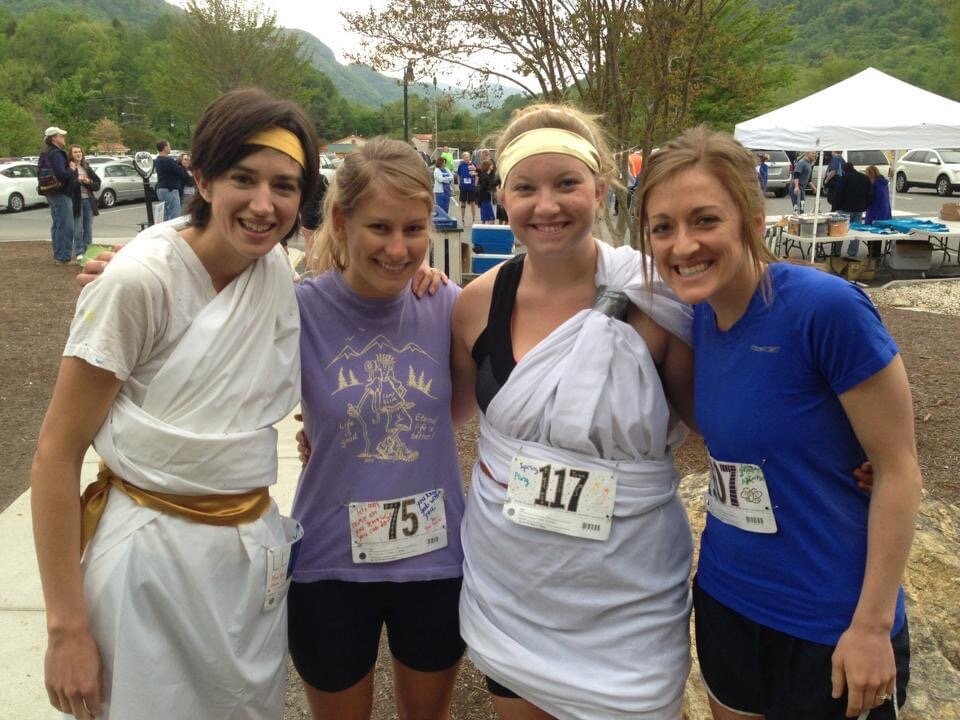
Carli Smith attended the Emmaus School of Biblical Studies 7 years ago. This week, we caught up with Carli to see how her life has changed after her year studying the scriptures at Emmaus.

Carli Smith attended the Emmaus School of Biblical Studies 7 years ago. This week, we caught up with Carli to see how her life has changed after her year studying the scriptures at Emmaus.
Carli, it has been a long time since we have seen you, what is going on in your life?
I am currently working in marketing and admissions for a Christian college in Franklin, TN. Our mission is to “equip and empower graduates to be on-mission in the world for Christ,” no matter the industry in which they find their careers. I also serve at my local church in the youth group, helping high school girls learn more about the character of God and how that impacts every area of their lives.
What originally led you to Emmaus?
I had just finished a Discipleship Training School with YWAM in 2012 and felt strongly that I wanted to grow deeper in my knowledge of Scripture and gain answers to lots of my questions by knowing the text holistically. I was vacillating between the decision to find a School of Biblical Studies or go to college to earn a degree. I found Emmaus on a random website that listed different SBS locations and ended up on the phone that same day with Tom Phillips! A few weeks later, I took a trip to tour a college and check out Emmaus and as soon as I drove up to the property, I felt this peace settle over me. I looked over at my mom, and we both knew it was the right next step. After learning more on that tour, I made my decision to go!
What sticks out to you the most after all these years?
I look back in awe of the grace that God instilled in me to get me through such an extensive study program. I am so grateful for the privilege to go to Emmaus and study Scripture. I wish I could time-travel back to be in the stillness of that season again with the Lord.
As I typed this, I feel very emotional! I pray my husband, and I have the opportunity to come back and drink from this fountain of truth again with you guys in person. I love what you guys are doing and pray nothing but blessings and joy over the staff, students, and mission. I’m so grateful for the gift of my time at Emmaus.
I also feel humility and gratitude knowing the rare gift it was to study scripture with such excellent resources available to me and in an environment that allowed me to ask the tough questions.
How are you currently utilizing what you learned at Emmaus?
I still use each book’s notes as I study through Scripture today. It really changed the way I approach reading the Bible. I don't focus as much on “What does this say about/For me” rather, I ask “What does this say about God, and in turn, how do I respond?''
What was your favorite book of the Bible during your SBS and why?
I enjoyed Genesis the most because it was the book I had previously had the most trouble understanding God in. I finished studying it more in love with Him than ever before after tracing His mercy through the pages.
Looking back, how did Emmaus affect your relationship with God and the Bible?
It gave me a holistic picture of God’s redemptive story and a posture of humility towards Him. After completing the program and Interacting so deeply with Scripture I am far more rooted in instinctively knowing truth and being equipped with a broader perspective.
Did you have a moment where it all "clicked" for you?
I would describe the understanding and growth I gained as a gradual process that continued to build upon itself in deeper and richer ways with each book.
What was your best memory from the school?
This is too hard! On graduation day, the students in our class made a 45-minute hike in the dark to watch the sunrise together. We were just sitting in awe of the metaphoric mountain God had enabled us to climb - with Him and because of Him.

We loved catching up with Carli and seeing how God is using her time at Emmaus to help her continue engaging the Bible and leading others in their faith. If you would like to learn more about the program that Carli did, find out more by clicking this link: https://emmausbibleministries.org/school