
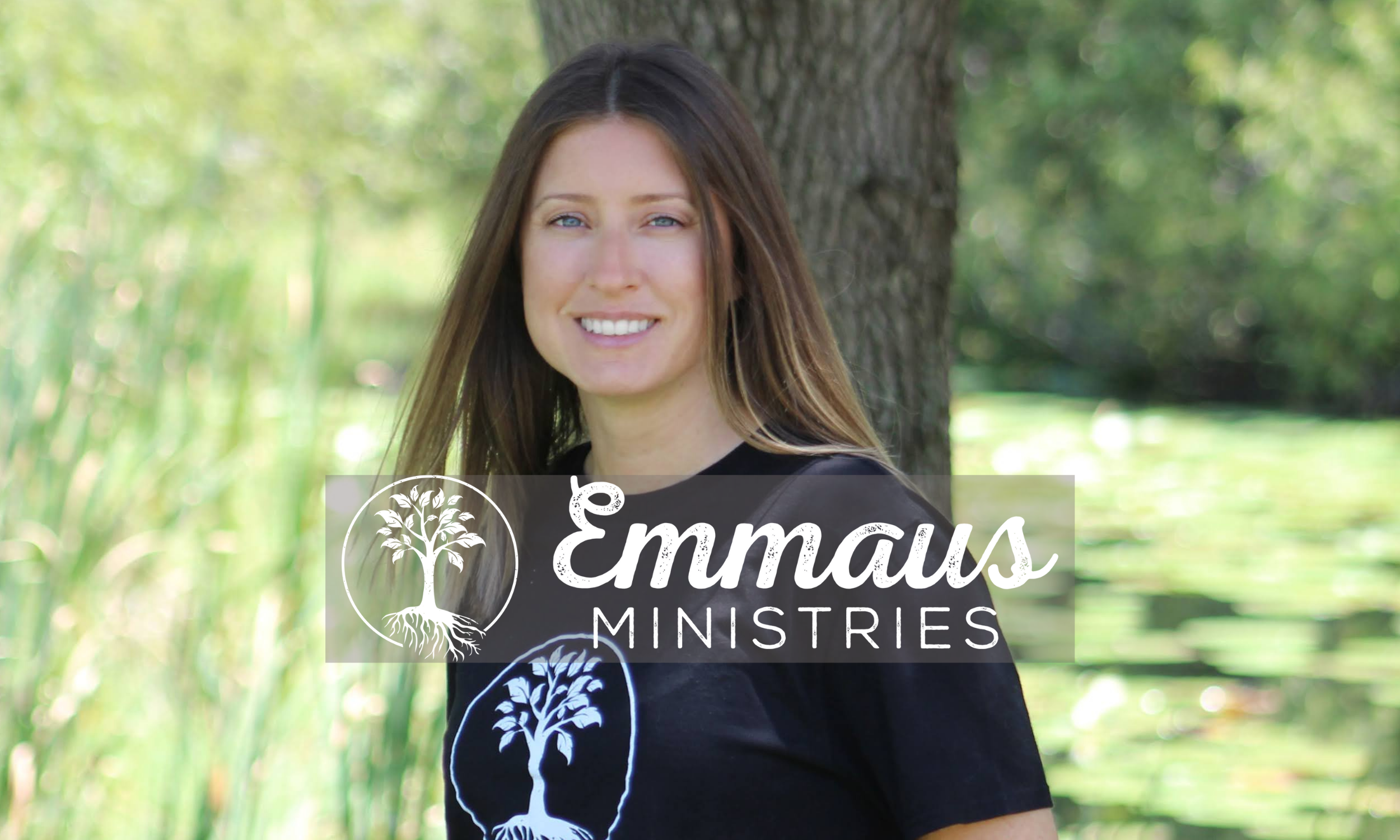
New Staff Welcome: Dena Sites
For the first time in my life, I understood how the books of the Bible fit together, and as I learned more about God’s character, I learned to trust Him more. Emmaus’ motto is “Know your Bible. Change your life.” Emmaus absolutely changed my life – it changed the direction of my life, how I approach Scripture, and my understanding of God.
Nothing gets the Emmaus staff more excited than when God leads people to join our team. This summer we are honored to announce two new support staff: Dena Sites and Kerry Yodzis. Dena and Kerry are alumni of our School of Biblical Studies. Dena will be support staff to our school of Biblical Studies, while Kerry will be working as an administrative part-time volunteer.
Dena was a student in our School of Biblical Studies from 2020 to 2021 and has come on staff as a missionary. Join us in welcoming Dena by reading about her journey to Emmaus.

After getting saved at 28 years old, I was always sad that I had not become a Christian earlier because I would have loved to go to Bible college. I had a strong desire to study God’s Word in a classroom setting, but I was established in my career as an attorney and I thought my time (i.e. my early twenties) had passed to attend Bible college. An attorney friend of mine mentioned Emmaus to me a few times in 2019 & 2020 because her sister worked at Emmaus, but being from California, I never actually considered going to Emmaus since it was in Florida. God, however, had other plans. On the night of July 5, 2020, I was lying in bed with sleep escaping me and all of a sudden I could not stop thinking about Emmaus. This was unlike me, so I had a sneaking suspicion that it was the Lord. The next morning I cried as I told the Lord that I didn’t want to move to Florida, but that I would if He wanted me to. Over the next eleven days, He confirmed that He was calling me to Emmaus through an ordained conversation with my friend’s sister & Emmaus staff member Kristi, a vision, a Florida license plate, and other confirmations. Three weeks later, I had quit my job, packed up my entire apartment, and was driving 2,500 miles across the country during a pandemic. (Sidenote: I don’t recommend this, but on the other hand, when the Lord calls, we go!)
And boy am I glad that I went! Prior to God calling me to Emmaus, I had been in a long season – and when I say long, I mean years – of a stressful job and chronic health issues, but mostly a long season of not putting God first. Not reading my Bible, not having consistent devotional time. I needed, and I prayed for, structure and accountability in studying God’s Word. God answered those prayers by bringing me to Emmaus where there was that structure. At Emmaus, my mind was instantly blown as I learned a completely different way of studying Scripture. We learned to inductively study Scripture through the lens of the historical background and what the verses would have meant to the Original Hearers, Original Readers, and Author. We studied each book of the Bible by reading each book in its entirety all at once, which brought so much more understanding than reading a book stretched out over weeks or months. Similarly, we studied through all books of the Bible in ten months, which gave such a clearer understanding of how all of Scripture fits together and of God’s plan and God’s character. For the first time in my life, I understood how the books of the Bible fit together, and as I learned more about God’s character, I learned to trust Him more. Emmaus’ motto is “Know your Bible. Change your life.” Emmaus absolutely changed my life – it changed the direction of my life, how I approach Scripture, and my understanding of God.


As my school year came to a close, I did not feel like my time at Emmaus was up. Emmaus had ignited in me a deep love for God’s Word and a strong desire to continue to be in God’s Word in Emmaus’ immersive style. I completely believe in Emmaus’ method and know firsthand how life-changing it is. Thinking about new students coming in the following year and being able to walk alongside them in the same experience that so changed my life seemed like such a privilege and an honor. During my school year, I had an amazing discipleship one-on-one (ahem, Kristi) that was an integral part of my student year and I have a heart to pour into others in the same way. I have also seen how each of Emmaus’ staff truly lives a life in pursuit of and honoring to Christ, and that also made me want to be a part of the Emmaus team. I am so excited to be joining the Emmaus staff and to help incoming students engage their Bible and walk with them as the Lord changes their hearts and their lives!
If you would like to learn more about our School of Biblical Studies, click here. If you would like to support Dena in her call to ministry, click here.
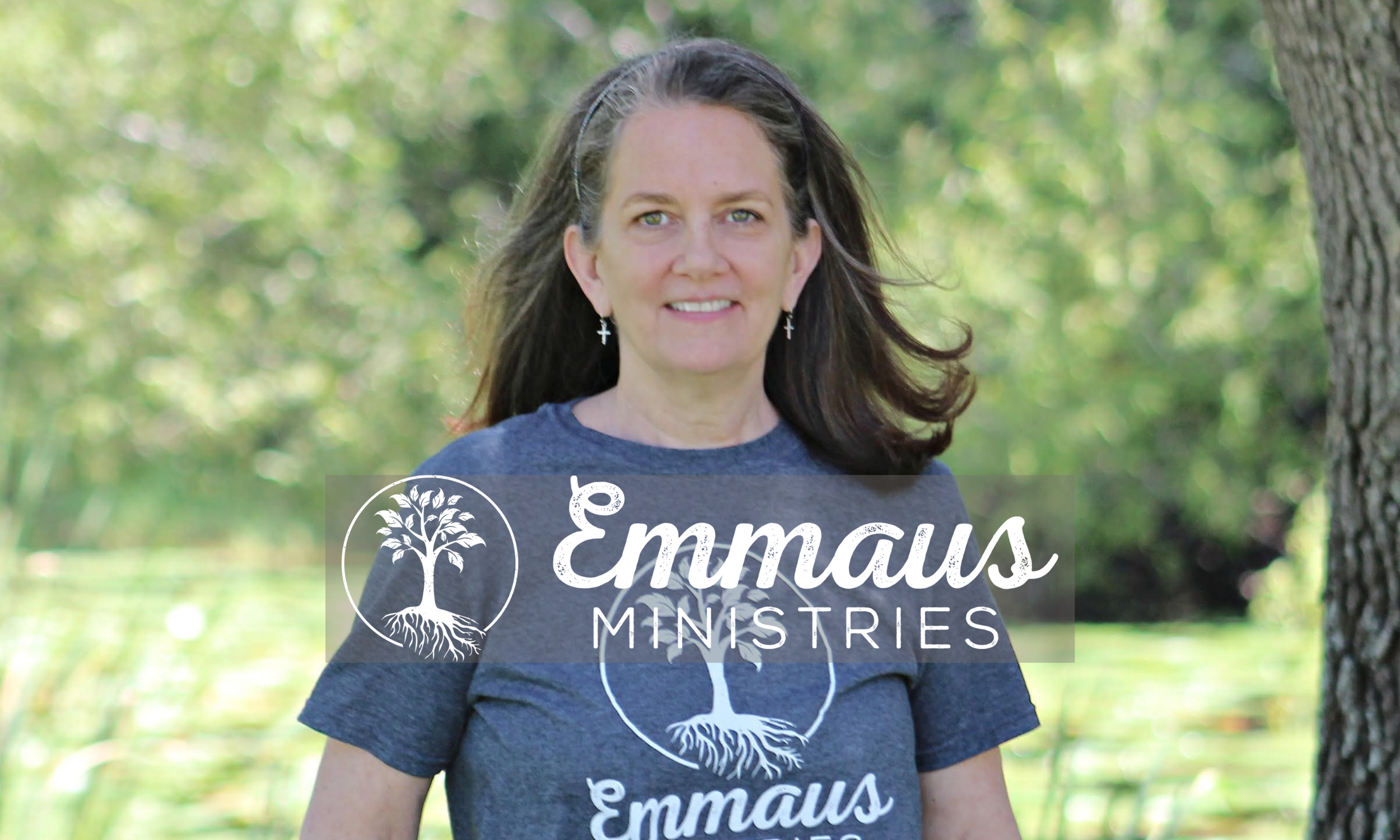
New Staff Welcome: Kerry Yodzis
Emmaus helped me to understand the true character of God. The faithful, loyal, steadfast love of God. The God who hurts when I sin against Him and the God who forgives me when I repent and turn back to Him. The God who never stopped chasing me down because He wants me to be with Him in eternity. The knowledge that I gained from attending the School of Biblical Studies has transformed how I think about God and my relationship with Him is completely different now.
Nothing gets the Emmaus staff more excited than when God leads people to join our team. This summer we are honored to announce two new support staff: Dena Sites and Kerry Yodzis. Dena and Kerry are alumni of our School of Biblical Studies. Dena will be support staff to the school, while Kerry will be working as an administrative part-time volunteer.
Today we want to introduce you to Kerry who was a student from the Fall of 2019 to the Spring of 2020. She helps keep our ministry running by working in administrations. If you have attended our School, Narrative Series, or emailed the ministry, chances are you have interacted with Kerry! Join us in welcoming her as she introduces herself below and shares how God called her to Emmaus.

Kerry Yodzis
Before Emmaus I had been on a journey of seeking God through reading my Bible, various Bible studies & church community groups. In 2018 a friend told me about one of the classes that Emmaus offered and I started attending in January. My first class was the New Testament Biblical Narrative Series. I was blown away by the presentation of historical background and extra-biblical knowledge that helped equip me to better read and interact with my Bible. I was fascinated with the pictures that were painted in my mind about the life and times that Jesus walked into and I was hooked. I attended the Old Testament series that fall and during this time, I was preparing for a trip to Israel. The trip was amazing and I can’t wait to go back again someday but as awesome as this trip was, when I got home I was left with the question, “What now God?” Not knowing the answer yet, I decided to retake the NT Biblical Narrative Series – again. After that I made the decision to sign up for their School of Biblical Studies and committed to a 10 month whirlwind journey through the whole Bible.
I had always wrestled with God in the Old Testament. He always seemed cantankerous and mean, handing out punishments like candy. I had a hard time understanding how a God who loves us enough to send His only Son to purchase our redemption could do the things described in the Old Testament. But what I really didn’t understand was … that I was totally wrong about Him! I wasn’t looking at Him in the right way, with the right eyes. I was using my modern mind with my own way of thinking and my own system of justice to see Him. Emmaus helped me to understand the true character of God. The faithful, loyal, steadfast love of God. The God who hurts when I sin against Him and the God who forgives me when I repent and turn back to Him. The God who never stopped chasing me down because He wants me to be with Him in eternity. The knowledge that I gained from attending the School of Biblical Studies has transformed how I think about God and my relationship with Him is completely different now.


When my school year came to an end, I was once again faced with the question, “What now God?” I knew in my heart that I didn’t want to leave Emmaus. I love studying the Bible with people who love studying the Bible. I love the idea of helping others to love studying the Bible and watching it transform their lives. I love God and want everyone to have the opportunity to get to know Him as He wants to be known. However, I also knew that staying would come with challenges I would never be able to meet in my own power. I needed to know that God wanted me to stay at Emmaus. I received my answer in the book of Hosea. I felt like God had put Hosea 10:12 on my heart and one day I walked into the Emmaus office and saw the same verse hanging on the wall. “Sow for yourselves righteousness; reap steadfast love; break up your fallow ground, for it is the time to seek the Lord, that he may come and rain righteousness upon you.” (10:12) I was that fallow ground. I had been cultivated and prepared and then left unsown until now, a year later. I knew God had spoken to me but that just put the exclamation point on it and now I've joined the team.
Thank you for helping us give our new staff a warm welcome. If you would like to learn more about our School of Biblical Studies you can do so by clicking here.
What does Jeremiah 29:11 Mean?
One of the most quoted and popular verses from the Old Testament. It has made its way onto coffee cups, T-shirts, and bumper stickers. While many people have found encouragement from reading this verse a greater joy and hope can be found from reading this verse in its historical and literary context.

Coffee Cups and Bumper Stickers
When it comes to Bible verses, Jeremiah 29:11 is one of the “popular kids.” “Popular” in the sense that it’s a verse easily found on t-shirts, coffee mugs, wall decor, and graduation cards. But this popularity comes with a cost; it means that the verse is rarely read from the actual pages of Scripture. The verse in isolation can still communicate truth, however, the depth and richness of meaning is found in the pages where it originates.
The Historical Context
Jeremiah was the last of the many prophets in the land of Israel. For 400 years, God had been pursuing his people’s hearts through his prophets; calling them to covenant faithfulness and calling out idolatry and injustice. Jeremiah's 30-year ministry was marked by the rejection of both the people and Kings. Eventually, he watched thousands of Jews and their king be taken into exile in Babylon.
Hopeless, captive people were then confronted with the reality that their exile was the consequence of their own rebellion against God. They were left wondering “what’s next?”
At that same time, a group of false prophets began to preach a message to the Jews that promised God would “break the yoke” of Babylon. They assured them that they’d be returning to their homeland within two years (Jeremiah 28:2-4). “Keep your bags packed, no need to submit to Babylon because God’s going to fix all this real quick!” As you can imagine, this was the message everyone was willing to embrace!
Jeremiah Chapter 29 was a letter addressed to the same audience to which the false prophets were speaking. But, instead of two years, Jeremiah told them that their exile would last 70 years. Instead of “keep your bags packed” Jeremiah told them to build homes, plant gardens, grow families, and seek the welfare of the city in which they were exiled. It was a different message, and as one could easily guess, a little less popular. A message’s popularity doesn’t, however, dictate it’s truth.
How to Apply Jeremiah 20:11 in our Lives?
God knew that although people love the idea of a “quick-fix” to problems and shortcuts to prosperity, what they truly needed wasn’t a geographical relocation but heart transformation. Which is why Jeremiah 29:12-13 followed the “popular kid” verse with “Then you will call upon me and come and pray to me, and I will hear you. You will seek me and find me, when you seek me with all your heart.” They wanted to return to the land. God wanted them to return to HIM. He knew that without reconciliation with Him, their hearts would be exiles from home no matter where they lived.
Jeremiah 29:11 isn’t a verse to guarantee a job promotion, a degree, or the purchase of a new home. It wasn’t written to provide a short term hope in circumstantial change. This is a verse for our own exilic experiences of suffering, disappointment, opposition, and discouragement. It directs our eyes to look beyond present circumstances towards the promises of God. It was and is a call to the greatest of all hopes: That the God who is with me in my exile has promised me an eternal future. It is this hope that produces a faithful life in the present, that patiently waits upon the God who pursues our hearts.
If you want to better understand the Prophets in their original context, consider applying for our School of Biblical Studies. Looking to dig into another popular verse from the prophets, check out our blog on Micah 6:8.

Caleb Ives
Caleb Ives is the Executive Director of Emmaus Ministries. Caleb holds a BA in Youth Ministries and Christian Education as well as a Masters in Theology.
Caleb is married to Latoya and father to 4 daughters. Lily, Grace, Maya and Faith.

What does Micah 6:8 mean?
What does Micah 6:8 mean? What was once an unrecognized verse from one of the more obscure books of the Minor Prophets has experienced a “glow up” of sorts in recent months. As Christ-followers attempt to navigate the socio-political climate of 2020, Micah 6:8 has become somewhat of a “filter” through which they engage with life in a way that is seeking after faithfulness.
Living out Justice, Kindness, and Humility in 2020.

He has told you, O man, what is good;
And what does the Lord require of you
But to do justice, to love kindness,
And to walk humbly with your God?
-Micah 6:8 (NASB)
What was once an unrecognized verse from one of the more obscure books of the Minor Prophets has experienced a “glow up” of sorts in recent months. As Christ-followers attempt to navigate the socio-political climate of 2020, Micah 6:8 has become somewhat of a “filter” through which they engage with life in a way that is seeking after faithfulness.
Who was Micah?
Micah the man was likely just a regular guy living in the suburbs outside of one of the larger cities in the nation of Judah. His ministry was long, spanning over 60 years. In essence, Micah had “seen some things.” There had been a time of great prosperity that was immediately followed by a steep decline in the social and economic well-being of the people. The disparities in the life of the “upper class” and the “common person” were vast and the prospects for those without power were bleak. There was internal political pressure from corrupt kings, untrustworthy spiritual leadership, and external political pressures from nations that wanted to invade and take advantage of the people. Sound familiar? Keep in mind this was happening in the 700s BCE. Christ-followers shouldn’t ever be concerned that the Bible is antiquated and irrelevant, especially the Old Testament!
With that in mind, let’s take a moment to examine what these words meant to Micah and the culture into which they were written.
“Do Justice”: מִשְׁפָּט mishpat: to do no unrighteousness in judgment, that which is just, lawful and according to the law
To “do justice” is an action. It is not just an acknowledgment that things are not as they should be, not an observation that gets lip service. It isn’t simply knowing the difference between right and wrong. It means living out life in a way that is always moving toward that which is just. This means both in the domains Christ-followers find themselves interacting (work, school, educational institutions, churches, etc) and in their lives. To “do justice” is to set one’s heart on that which is just and consistently be moving in that direction. To “do justice” is to love your neighbor as yourself.
“Love Kindness”: חֶסֶד checed: zeal toward anyone, benevolence among men, mercy and pity to those with misfortunes
To “love kindness” is an action. It isn’t so simple as to mean that one is perceived as a “kind person.” It doesn’t even mean taking action that is a “kind thing to do.” It means that kindness motivates you to act and act zealously! The definition of “zeal” is: great energy or enthusiasm in pursuit of a cause or an objective. To “love kindness” means to pursue others in a way that shows them that your heart is for them on a personal, human level. To “love kindness” is to love your neighbor.
“Walk Humbly With Your God” : צָנַע tsana: to act submissively, modestly
To “walk humbly with your God” is an action. The root word here is related to “lowly.” This is living from a posture that doesn’t just have an inward impact, but also an outward one. A Christ follower’s “walk” (meaning your day to day faith life) is guided by the one to which that life is submitted. It means living a life submitted to God and allowing him to guide your path in a posture of modesty and humility. To “walk humbly with your God” is loving him with all your heart, soul, and strength.
In light of all this, Micah asks us to consider: “What are we supposed to do?”
Pastor Mike Ashcraft of Port City Church in Wilmington, NC is fond of saying, “If God created life, then he gets to define it.” It’s absolutely true. In Micah 6:8, there exists a list of requirements that God desires for those walking in his ways to define themselves. As lovers of justice, bearers of kindness, living in and walking closely beside him. It is an embodiment of what Jesus defines as the greatest commands.
The answer is practical, daily action. In the year 2020, it can feel like nothing an individual can do will help or change the circumstances that are the day to day reality. However, Micah provides somewhat of a “checklist.” Do justice, love kindness, and submit to walking not in our own ways, but in the ways of Jesus, the Christ, the Lord, and the Savior to all who profess faith in Him.
Looking for more on the book of Micah? Check out this video that summarizes the main ideas and themes of the book by the Bible Project. Wanting even more? Register for our School of Biblical Studies, where you get to study every book of the Bible in its historical setting.

Morgan Phaneuf
Morgan is a Bible teacher for Emmaus Ministries. She is a graduate of the Emmaus School of Biblical Studies. She is deeply passionate about seeing every Christ follower be able to know and confidently interact with the Bible.
Morgan is married to Justin and mother to their two children Drake and Tannis.

Alumni Spotlight: Ellen Ceely
If you're thinking of doing the school because you want to understand the Bible and grow in your relationship with God: do it. It will be one of the hardest, most amazing things you'll ever do.

Where are you and what are you doing now?
I live in Orlando, FL, and currently, work as an assistant at the Episcopal Diocese of Central Florida for Justin Holcomb. I also get work on the side as a writer.
What sticks out to you the most 3+ years later?
I graduated from SBS in 2012 and left the staff in 2017. I think what sticks out to me most is just how much my time of studying the Bible and digging a deep foundation of belief both shaped and changed the course of my life. I went in as a very legalistic believer who was hungry to know and understand what God's Word said. I didn't want people to tell me what it said, I wanted to be able to open it up and figure it out with the right tools. I went in with a stubbornly decided idea of where my life was headed and what I was going to do - regardless of what God might think about that. Two months into the school I started to realize how wrong that attitude was. God used SBS to change everything I'd ever been taught about who he is and what he wants from me. His grace and the amazing way in which God used the school to change my heart and the course of my life are what will always stick out to me most. He didn't always give me directions or full answers on where to go, but he ALWAYS gave me his love, grace, peace, and courage to do whatever he asked.
How are you still using what you learned at Emmaus?
Every sermon I listen to, every book I read, every TV show I watch, every song I hear - it all gets filtered through the lens of Inductive Bible Study and what the Bible has to say about it, whether I want it to or not! A more specific example is that I'm helping my boss do research and gather Bible verses for a devotional he's writing on Christology. I've been able to use my knowledge for devotionals, children's church curriculum, and just teaching it to others both in groups and on an individual basis. I don't know what God has in mind for the future, but I know it will continue to come up and be used as time goes on.
Looking back how did Emmaus affect your relationship with God and the Bible?
Before Emmaus, I'd always approached the Bible with reverence, but also feeling like "this is too hard for me to understand and I don't know what I'm doing". Being able to learn why each book was written and why it was included in the Bible gave me the foundation I needed to understand better who God is. You cannot spend a year intentionally studying the Bible and NOT have your view of who God is changed. I grew up afraid of the Holy Spirit and even of the Father. Jesus was my friend, the only one I could talk to with any sense of comfort. My view of the Father was one of an angry dad who only comes around when I've messed up, who saw everything bad I'd ever done, and was constantly disappointed in how much I failed to be better. The Holy Spirit I really knew very little about and was afraid to even acknowledge. He was, to some degree, a scary ghost to me. But the God I knew from the church and from my own interpretation of what I'd been told, was not the God I found in the Bible. God showed me a loving and gracious Father who loves me deeply. He showed me a comforting Spirit who guides and guards me. Emmaus gave me the gift of the whole Bible and an ever-growing understanding of the Trinity. Most importantly: Emmaus didn't answer all my questions about God, it made me hungry for more!
I should add, however, that Emmaus taught me about community, leadership, and friendship too. Over my time as a student, and on staff, I learned so much about what it means to be a good leader and fellow member of the body of Christ. There was room to confront and to laugh and to love one another. There was also an admittance of failure and a modeled humility and generosity that I had never seen in the church before.
Best memory from the school?
So many! As a student, it's almost impossible to pick just one! We had so much fun together. My roommate and I spent many nights talking, making apple pie together, and watching good movies. I had my 21st birthday as a student and the amount of love I received from the staff and the students still warms my heart. They did everything from decorating my desk and room to breakfast out to kidnapping me for a late-night run to get ice cream. There are beautiful memories I have of our trip to the beach, of fall break with my roommate and two other students, of students chasing each other around with Nerf guns and toilet plungers (it's a long story). The whole year is one long beautiful memory that I treasure. As a staff, my favorite memory will always be from my first year. I walked into the classroom late at night to find one student there. When I asked if she was okay, she looked at me with tears in her eyes and just said, "I get it. I finally get it. God loves me so much. His grace is deep and strong. He doesn't just love me...he likes me too."

What was your favorite book of the Bible during your SBS and why?
During SBS my favorite book ended up being Leviticus. Hebrews didn't make much sense to me until I read Leviticus and studied the Law of the OT. Understanding Leviticus brought me to a deeper understanding of who God is and just how much Jesus did for me in his death and resurrection. It also gave me deeper reverence for him, to see him as my high priest AND the only perfect sacrifice. The Pentateuch in general gave me a better view of just how BIG and powerful God is, and that, in turn, impressed upon me how amazing his mercy, love, and grace are. But Leviticus was what left the biggest impact on me.
Did you have a moment where it all "clicked" for you?
Probably during Galatians because I realized I was trying to earn God's love and be worthy to stand in front of him while still constantly feeling like I never would. It was the first moment I ever truly felt completely seen and entirely accepted and loved - no strings attached. My realization of freedom and ease in God's presence because of what Jesus' sacrifice meant for me didn't make me want to "misbehave" or act more sinful, rather it made me want to fall deeper in love with the God who had shown me, such love.
Anything else you want to share or want us to know?
If you're thinking of doing the school because you want to understand the Bible and grow in your relationship with God: do it. It will be one of the hardest, most amazing things you'll ever do. I don't know your situation or what sacrifices you might have to make in order to attend, but I can promise that it will be worth it. The only word of caution I give you is this: you will get out of the school what you choose to put into it. The teachers at Emmaus are amazing and they will work hard to give you all the tools and information you need to succeed at getting everything you possibly can out of the school. But you are the only one who can do the hard work of studying. You are the only one who can choose to get up every day and make it happen. You will have books you love and books you don't care for much. You'll have weeks where everything crumbles and weeks where you feel like you're soaring. You'll probably even have staff members you love being around and some you don't care for as much. But if you give 100% of all you have to give every single day you're at Emmaus, I can promise that you'll get back much more than you give. Every sacrifice will be worth it because Jesus is worth your time and effort. God is so excited to have a deeper relationship with you. But don't do this for him to somehow earn his approval or his blessing on your life, do it for you. Do it for your own personal spiritual growth and understanding. Do the school, study your Bible, ask God to change your heart and your mind, and your life with his Word. I promise he will, and it won't be the way you expect it to be, but there will be an amazing ripple effect where the things you learn and the changes that happen in your life will have a positive and challenging effect on everyone you know and love.
A huge thank you to Ellen for sharing her experience with Emmaus Ministries. If you would like to learn more about the school Ellen attended, click here.

Ellen and her husband Brian