
Reflections for Holy Week:
Good Friday
By Jacob McRae
Good Friday celebrates the greatest paradox of the Christian faith. It is a day that commemorates the Savior of the world being betrayed, put on trial, and crucified as a criminal despite being declared innocent. It is the day we fix our eyes on the cross--an instrument of torture, shame, and death in the eyes of the world--becoming, in the purposes of God, the very sign of victory. It is a day where everything appears backwards:
The innocent is condemned so the guilty might go free.
The wounded one becomes the healer.
The dying King brings life to His enemies.
For those of us who call ourselves Christians, we dare to call that particular Friday good because we believe that in that terrible moment on the cross, Christ spoke His final “amen” to a love that is both eternal and unshakable.
“For the word of the cross is folly to those who are perishing,
but to us who are being saved it is the power of God.”
(1 Corinthians 1:18)
The Cross and the Love of God
Among the many challenges that the paradox of the cross offers, one of the most difficult to accept is its inherent message of love--and not just any love--but the death of God for the sake of the sinner. Amidst all of our insecurities and feelings of shame, the cross of Christ calls us to believe that God has offered one sacrifice for our sins (Himself), for all time, because He loved us. How is it possible to believe such a bold claim as this? How can one believe that, as Paul declares in Romans 5:5,
“...God's love has been poured into our hearts through the Holy Spirit who has been given to us.”?
What if we doubt this truth? What if God’s Spirit feels silent within us? How can we know God’s love for us to be true when we live lives so undeserving of it? When we feel so undeserving of it?
Paul goes on in Romans 5:6-8,
“For while we were still weak, at the right time Christ died for the ungodly. For one will scarcely die for a righteous person—though perhaps for a good person one would dare even to die—but God shows his love for us in that while we were still sinners, Christ died for us.”
Not only are we to believe that God has communicated His breathtaking love through His choice to die for the undeserving sinner--but Paul lays the evidence of this love upon an incontrovertible and historical fact: Christ’s death. Jesus was crucified. So while our experience of God’s love may feel subjective, it has in fact been grounded in an objective historical reality. In other words, if we want to know whether God loves us, Paul urges us not to begin with our own feelings, but with the cross. God’s love for us is not so fragile as to rise and fall with our emotions. His love is not dependent on our performance. And the cross stands as an unchanging witness that God’s love has been decisively demonstrated in Christ. And that is indeed good news.
The Cruciform Disciple
But the paradox of the cross does not end with what Christ has done for us. It extends into what He calls us to do with our lives. For Jesus did not only invite us to believe in His decisive work on the cross--He calls every would-be disciple to take up their own.
“If anyone would come after me, let him deny himself and take up his cross and follow me. For whoever would save his life will lose it, but whoever loses his life for my sake will find it.” (Matthew 16:24-25)
This remains one of the more troubling (and difficult to follow) parts of the Good Friday paradox: the way of the cross is not only the means of our salvation, but the pattern of our discipleship. This is where theoretical faith must be transformed into Spirit-enabled action. To follow Jesus is to:
Lose in order to gain.
Surrender in order to receive.
Die in order to live.
As Paul said in 1 Corinthians 1:18, this is “folly” to a world that tells us to preserve ourselves, to protect whatever we can hold in our hands, to secure our own identities and futures in financial success and self-serving frugality. But Jesus tells us that life is not found there. Life is found on the other side of surrender. And in the cross, we do not find a path to destruction--not true destruction, anyway. Rather, it remains the only path to true life.
And so the Christian life becomes cruciform (shaped by the cross). While this may not take the shape of literal crosses upon our backs, it must mean:
We forgive when it costs us.
We love when it is undeserved.
We lay down our rights, our pride, our need for control.
Like our Savior, we choose to do this, not because suffering is good in itself--but because we trust the One who turned the cross into the doorway of resurrection. Good Friday reminds us that God was able to bring life out of death, and Jesus calls us to trust Him enough to walk that same path.
Why is Good Friday called “Good”?
a poem by Sarah Phaneuf
They call it Good Friday
But if you stop too soon,
It all sounds wrong.
Because what’s good about blood?
About a beaten man hung high,
arms stretched wide--
innocence pierced by pride?
What’s good about silence
when the Son of God cries out,
“My God, My God, why…?”
and seems to get no reply?
If that’s where it ended--
A borrowed tomb, and sealed stone--
then good would be a lie.
But this day--this Friday--
it’s one chapter in a greater story.
The pain is real, the scene is heavy,
But even shadows point
towards morning glory.
Because death?
Death leads to life.
Pain--to healing
Sorrow--to joy
And this?
Wasn’t just the story of a man destroyed
This was love.
Self-giving, sin-forgiving,
All-restoring love.
He didn’t just die--
He chose to.
Walked into the storm
So we could walk through.
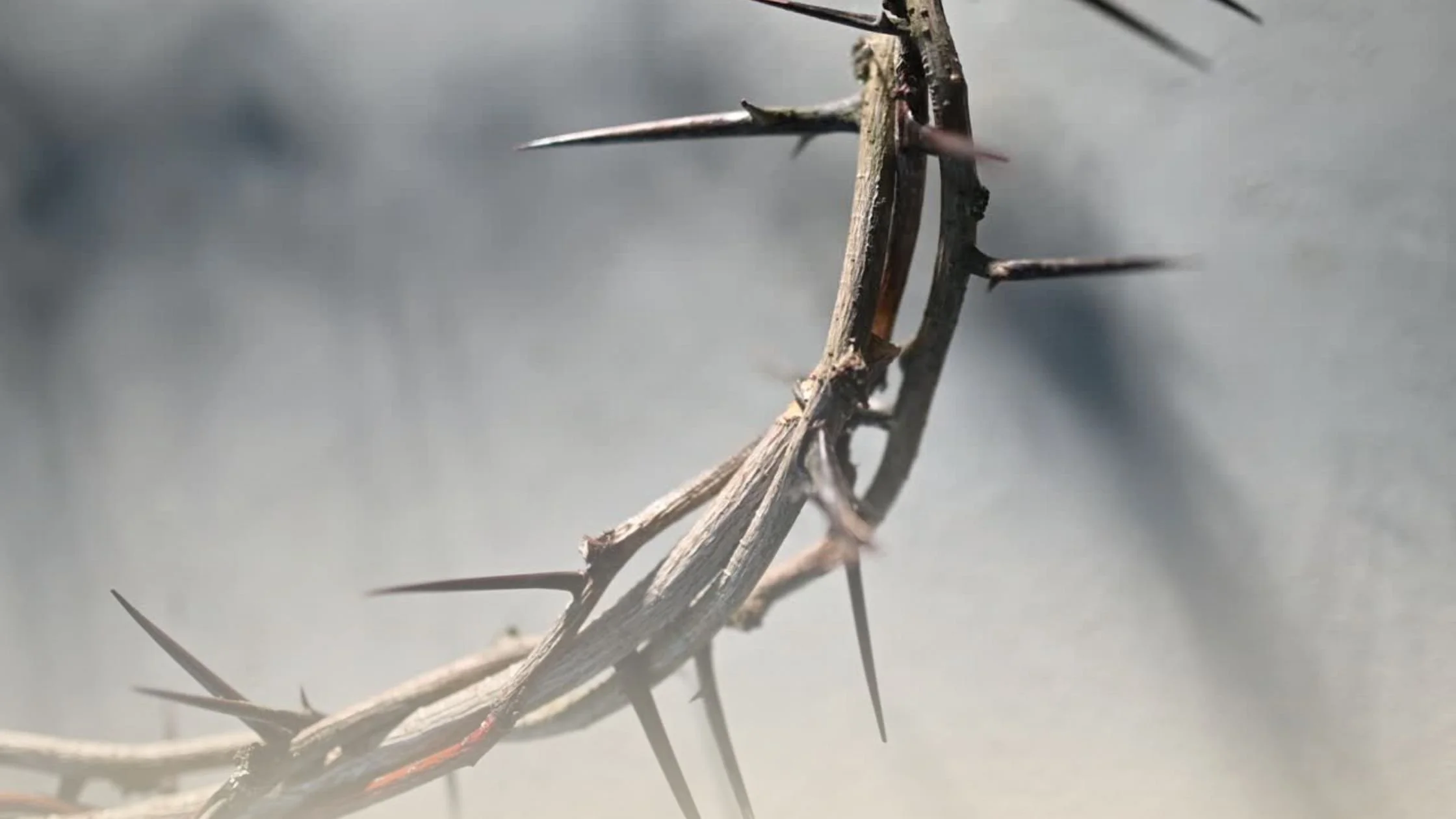
Wore the crown of thorns
So we could wear the crown of life.
Gave up his breath
So we could breathe again.
So yes, indeed--
We call it Good Friday.
Not because it felt good.
Not because it looked good.
But because through the worst thing,
came the best thing
Through the darkest day
came the dawn.
The cross wasn’t the end--
just the door to begin.
It was the moment that broke the curse,
that opened the grave,
that wrote redemption in red.
The moment eternal life was made possible.
Because three days later,
He rose.
And that’s why we call it “good.”
To learn more about Jacob and his family follow his blog: https://jacobandsamantha.org/